Lars Frank · 15 October 2026
Decoding Sequence Adjustments in Platform Integration Workflows and Their Ripple Effects on Resource Allocation
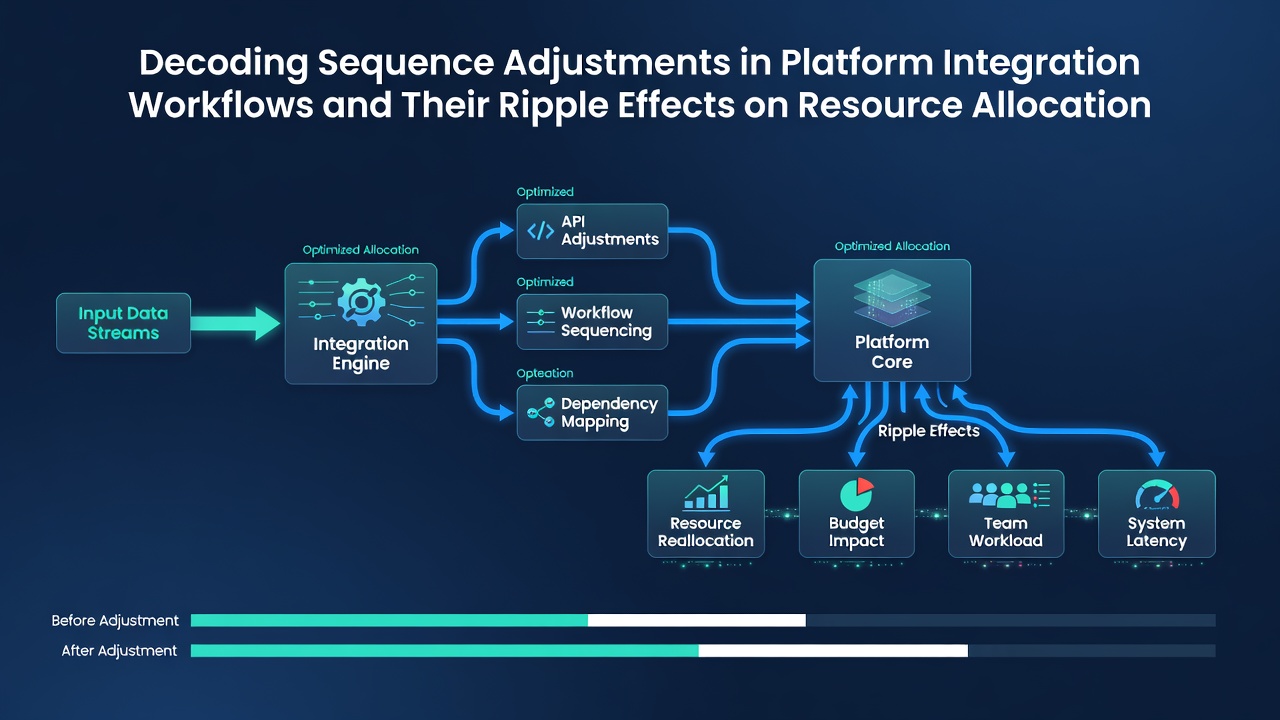
Platform integration workflows depend on precise sequencing of tasks that connect disparate systems, and adjustments to those sequences can shift how resources get distributed across computing environments. Researchers at various institutions have tracked these changes through controlled experiments where altering the order of API calls or data synchronization steps led to measurable differences in CPU cycles and memory usage. Data from multiple industry reports shows that even minor reordering often triggers downstream reallocations because each step in the chain consumes bandwidth, storage, and processing power in ways that compound over time.
Understanding Sequence Adjustments in Integration Workflows
Sequence adjustments refer to deliberate modifications in the order or timing of operations within workflows that link platforms such as cloud services, enterprise software, and third-party applications. Observers note that these tweaks occur when teams respond to new requirements like updated compliance rules or changes in data volume, and they typically involve reconfiguring scripts or orchestration tools to execute tasks in a different progression. Studies from academic sources indicate that such adjustments arise frequently in environments handling large-scale data exchanges, where the initial sequence may no longer align with current load patterns or security protocols.
Those who manage these systems often examine dependencies between tasks before making changes, because reversing two steps can alter the entire flow of information and computation. Evidence from case analyses reveals that adjustments sometimes reduce latency in one area while increasing demand elsewhere, which forces administrators to monitor overall system behavior closely. In practice, teams apply these modifications through version-controlled pipelines that allow rollback if resource metrics deviate from expected ranges.
Mechanics Behind Adjustments and Initial Resource Shifts
The process begins with mapping out each workflow component and identifying which tasks share resources like network connections or database pools. When a sequence changes, the timing of resource requests shifts, and this can create temporary spikes or lulls in utilization. Figures from monitoring tools used by organizations show that reordering a data validation step ahead of a transformation routine, for example, can move peak memory consumption to an earlier phase and free up capacity later in the cycle.
Engineers use simulation software to predict these effects before deployment, running models that calculate cumulative resource draw based on historical patterns. Research indicates that platforms relying on microservices architectures experience more pronounced shifts because each service operates independently yet draws from shared infrastructure pools. Adjustments that consolidate calls into fewer sequences tend to lower total network overhead, whereas splitting them can distribute load more evenly across nodes but require additional coordination overhead.
Ripple Effects Across Resource Allocation
Once a sequence adjustment takes effect, ripple effects appear in several dimensions of resource allocation including compute time, storage throughput, and personnel oversight. The first wave often hits processing units as tasks compete differently for threads and queues, and subsequent waves influence how caching mechanisms handle repeated data access. According to findings published by the National Institute of Standards and Technology, workflow resequencing in integrated environments has been shown to alter energy consumption patterns in data centers by up to 15 percent under sustained loads.
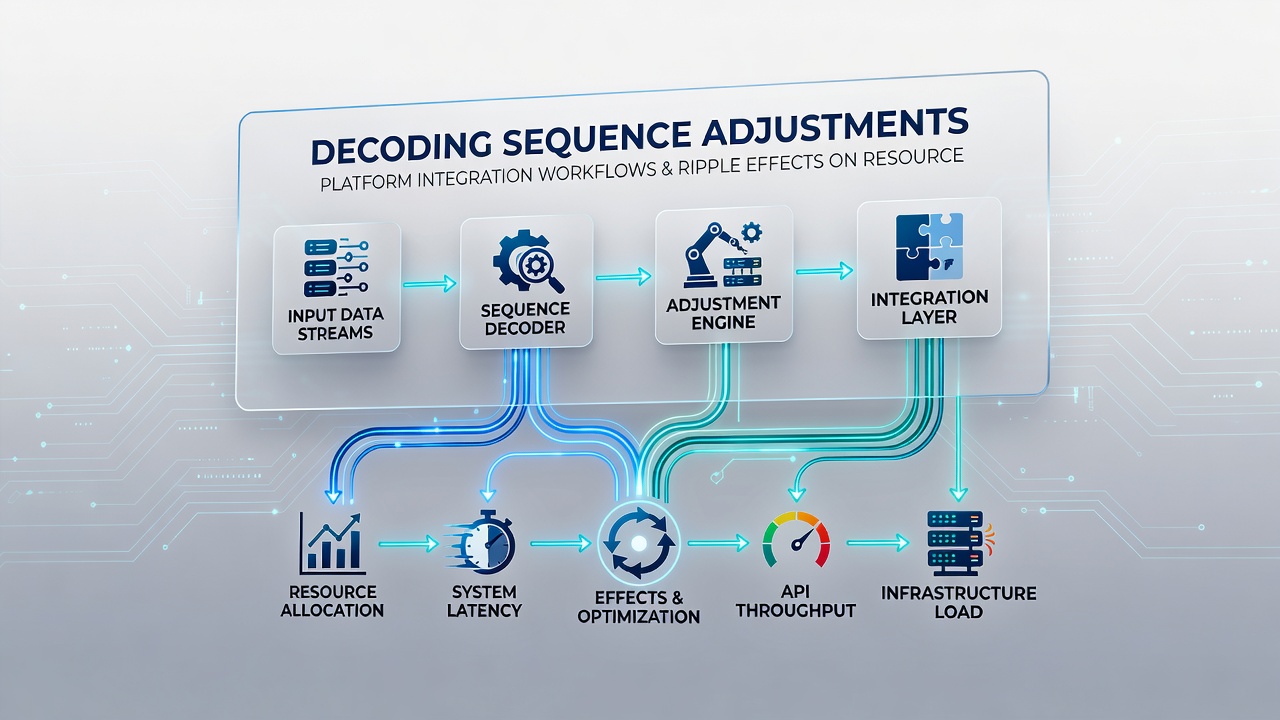
Storage systems feel secondary impacts when data staging areas receive inputs at different intervals, which can lead to fragmentation or underutilized space until rebalancing occurs. Human resources also adjust because monitoring teams may need to reassign analysts to track new metrics or troubleshoot unexpected bottlenecks. Data collected across multiple regions demonstrates that organizations in Australia and Canada have documented similar patterns where sequence modifications prompted reallocations of both technical and staffing budgets within weeks of implementation.
Observed Patterns in Real-World Deployments
One study revealed that a logistics platform adjusted its integration sequence to prioritize real-time tracking updates before inventory reconciliation, resulting in a redistribution of server instances across availability zones. The change reduced average response times for tracking queries while increasing background processing demands during off-peak hours. Observers note that these outcomes depend heavily on the underlying hardware configuration and the volume of concurrent users at the moment of adjustment.
Another documented case involved a healthcare data exchange network that reordered authentication steps ahead of record retrieval, which shifted encryption workloads and required temporary increases in specialized GPU allocation. Research from European academic consortia has quantified how such shifts propagate through interconnected systems, showing that early-stage adjustments can stabilize overall resource use when paired with predictive scaling rules. Teams that implement gradual rollouts capture metrics at each phase and use the information to fine-tune subsequent allocations without full system restarts.
Developments Anticipated by October 2026
By October 2026 several major platforms plan to release updated orchestration frameworks that embed automated sequence optimization based on real-time resource telemetry. These frameworks draw on machine learning models trained against datasets from prior years, and they aim to minimize manual intervention while maintaining compliance with evolving data residency requirements. Reports from industry groups suggest that adoption will vary by sector, with finance and manufacturing entities moving first due to their high integration complexity.
Standards bodies continue to refine guidelines that address how sequence changes should be documented and audited, which may influence how organizations budget for both infrastructure and compliance staff. The shift toward these automated approaches builds on existing practices yet introduces new variables around model accuracy and fallback procedures when predictions diverge from actual loads.
Conclusion
Sequence adjustments in platform integration workflows create interconnected changes that affect resource allocation across technical and operational layers. Data compiled from diverse sources shows consistent patterns of redistribution in compute, storage, and oversight requirements, while tools for prediction and monitoring continue to evolve. Organizations that map dependencies thoroughly and track metrics through phased implementations maintain better control over the resulting allocations, and upcoming framework releases scheduled around October 2026 are expected to further embed these capabilities into standard practice.